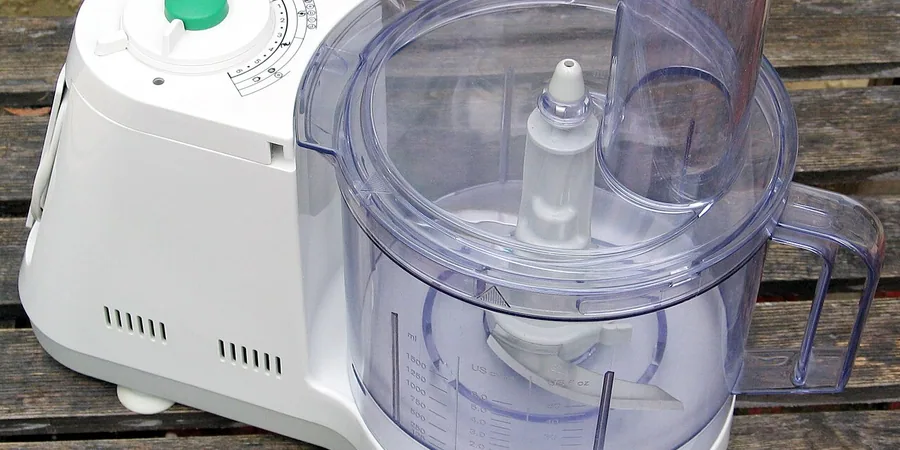
If you have limited counter space, choosing between a blender and a food processor can be a tough decision. These two appliances are often mistakenly thought to be interchangeable, but their designs are designed for different food processing tasks. The key difference lies in how each machine moves and handles ingredients, as seen in their opening bowls and attached instruments.
Manufacturer manuals underline this divide. KitchenAid's blender manual links to instruction booklet (PDF) details a waterproof lid for the blender and a separate control for pulse. In contrast, at least one food-processor manual hosted by a big-box store PDF attached to online instruction booklet states to put food into the processor's "work bowl" as soon as you've cleaned off the cover.
Chopping, blending, grating, slicing, or shredding signal to the user to turn the processor off and unplug the appliance, being careful not to exceed of continuous operation and allowing a rest between processing cycles, according to the PowerPac 4-in-1 Multi-Functional Food Processor user guide manual attached to online instructional website. Similarly, a blend-and-process manual hosted on Amazon PDF instruction manual advises starting the processor at the lowest few speeds and increasing the speed gradually until you achieve the desired consistency.
But the differences in manuals go beyond opening and closing motions. A food processor manual PDF instruction manual attached to online shop page shows a recommendation for removing tendons, bones, and skins of meat before slicing it on its own.
Meat processing requires removing tendons, bones, and skins and cutting the meat into slices before processing, according to a product page for a Simplus multi-functioning Machine. Vegetables to be processed should be cut into strips or slices no wider than 1–2 cm and no longer than 5–10 cm
Preparing vegetable pieces for processing requires cutting them into strips or slices no wider than 1-2 cm and no longer than 5-10 cm, as specified on the product page for a Simplus multi-function food processor.
But the blender-and-processor manual from Amazon makes it clear that a different kind of prep is key for using a blender accessory. The manual says to put fruit in the fruit filter after cutting them into small pieces.
Crucially, food processors and blenders are rated very differently for horsepower, depending on the model and manufacturer. The Simplus product page suggests that they've put together a multi-functioning food processor with 300W, but there are stronger, 1250W models out there on the market, as seen on this Amazon-hosted webpage.
The difference between the two is very clear in some 3-in-1 appliances Amazon-hosted instruction manual, where both blender and processor attachments can plug into the same base.
Similarly, the theoretical distinction between processors and blenders is stark. Cuisinart manual lists a PowerBlend Duo blender/food processor.
But deciding between the two machines in the store still leaves you with the realities of counter space. An economical answer to the conundrum of which one to invest in for your limited kitchen real estate is:
Think about what you need. If all you need is smoothies and protein shakes, invest in a blender. If you want to process solid foods like apples, a blender may not be suitable.
If you want to do salsa, then get the food processor, if you have the space. Salsas are made with chopped up vegetables and don’t need blending.
Tough materials like lobster shells may be better handled by a food processor.
If you want to dice tomatoes or chop onions, a blender may not be the best tool.
If you have very limited counter space, invest in an appliance that can move the jar from base food processor to blender with a quick turn. Some Cuisinart models, for example, allow you to cook up some homemade chicken soup and blend the apples at the bottom after.