They buy you a storm-proof appliance and you treat it like your toothbrush or kitchen knife. When it comes to coffee grinders, grind consistency tells you everything you need to know - unless you ignore it.
Fix-it-yourself has been glorified in coffee geekdom to almost a fad. Instead of repairing, replacing, or grading your grinders, many do not even consider replacement until they literally cannot force open the portafilter. Without manufacturers' data, or any service manuals from retailers, that tends to leave grinders under-maintained, prematurely killed, and/or unavailable in a world that does not read!
Most coffee folks who have a daily espresso need can expect to need to change out or replace their grinders every 5 to 7 years, or every 500-1000 pounds of coffee. Already that exact range varies across sources. Complete Home Barista puts commercial-grade burr grinders at 10-15 years with proper care, and budget consumer models degraded after 3-5 years. BaristaPick's range is the same, 5-10 years, with premium models for another 5.
It also matters how you used the grinder. BaristaPick's range is based on steel burrs lasting 500-1000lbs and Espresso Gear Lab gives a home-use range of 500-1000lbs too. That lasts 5-7 years for someone making 2 cups daily with a Breville SGP, 7-10 years with the DF64. The Baratza Encore is pegged for 5-7 years, the Niche Zero 10+, the Eureka Mignon 10-12 years and a Moqa post breaks it down further: ceramic burrs can last longer but can chip if a rock gets through, and for steel, it's 500-2000kg, 1000-2000 for non-coated, 4-7000 for coated, over 20,000 for tungsten-carbide-coated burrs. But how do the manufacturers estimate those?
It really ought to be pretty straightforward: make a good grinder, figure out how long it lasts, such as those 10-15 years Complete Home Barista puts on a commercial burr grinder, or the 7-10 years on a DF64. 5-8 years is the downgrade given by Moqa, 500-800lbs. For an entry-level conical grinder, it might be 500-1000lbs, a mid-range flat or conical in the 60-100+ or more for the burrs. Manual grinder ceramic burr replacements start at 15-30 bucks, grocery store blade grinders way way cheaper, and more. But none of them mention when you should expect to replace the burrs, or why.
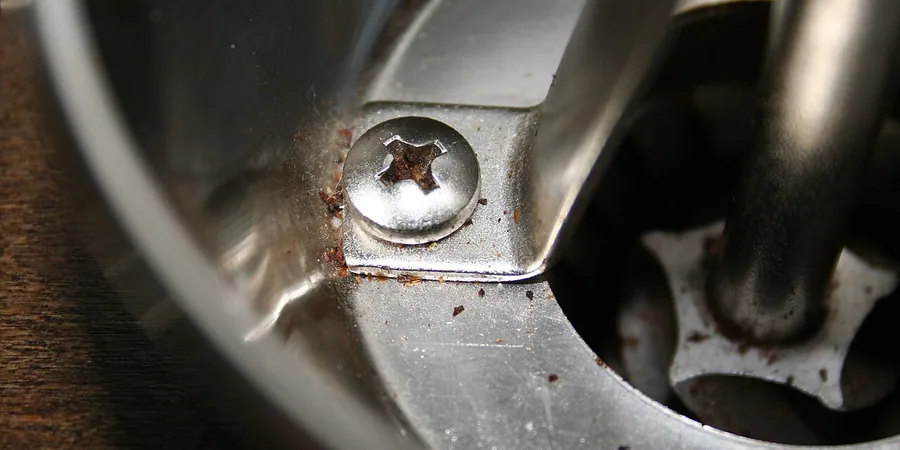
What they all say is that burr life does not matter as much as when the grinder spoils your coffee: the grind consistency worsens long before the grinder fails. Your non-tungsten-carbide frontal burrs are the ones most likely to jam or rust. Ceramic burrs can chip - say, like if a rock makes it through. The heavier gauge blades are more likely to jam, like too many kitchen tools you're trying to juggle at once. As for why?
Three factors spoiled the most coffee in the survey of reports: wear from normal use and burr rotation, oily dark roasts gumming the burrs, and static packing the hopper and the coffee chute when you try to shake out the coffee grounds or clean out the grinder. It also seems that you ought to pull the burrs to clean them more frequently than the brush cleaning - though rice is better for that. Assuming you avoid dish soap, skip washing rubber parts (as warned by manufacturers), and clean burrs preventively to extend their life. also shoots down what most do on a regular basis: toss a couple of denture-cleaning tabs down and never look back. That's why burrs degrade under regular usage, and how you know when they jammed. Give the hopper another blow out with the brush. And as for stone strikes or coffee-bean defects - these are also mentioned through a variety of reports, as if they are abundant enough to warrant replacement parts distribution and servicing.
It just is not that extended. - and neither has Moqa. Moqa specifically notes that you ought to clean out the grinder when you notice anything happening, when you have clogs or jamming or so forth - okay. But that ought to be key-to-customers somehow. It is not as if shades of contamination have never caused actual filtering failure, or required warnings about safe furnace filling.
Those major factors are notable for being either primary-maintenance or lifestyle factors. And that leads into the final concluding observations, for at least this article. When you are considering whether to repair a grinder, buy a new grinder versus new burrs:
It would be helpful to have requirements guidelines, manufacturer's original patents, how they grade the grinder at the converter, standards for stone or defect strike detection criteria, and a clear fix-for-help stuff when you did not use dish soap on the rubber gasket parts. It would be helpful to know when burrs straight up go bad, and when they break without much notice. Those things would be most helpful in deciding—despite ignored fixes—when your coffee grinder acts up.