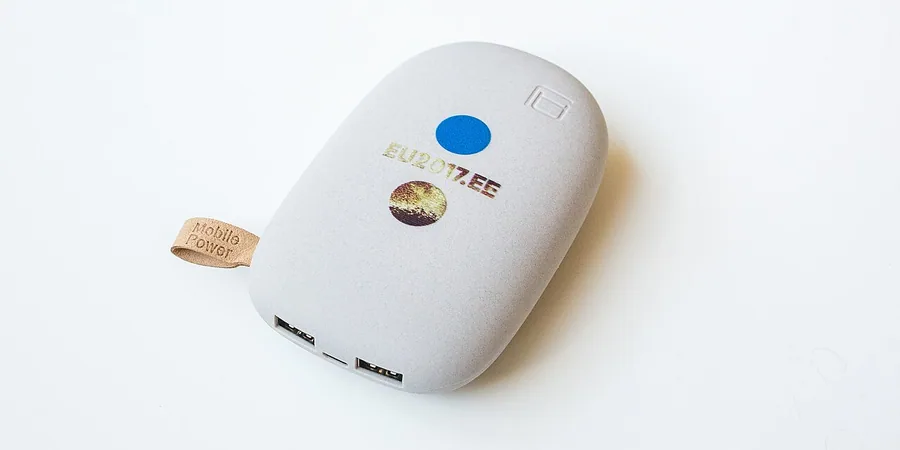
When it comes to power banks, the printed capacity in milliampere-hours (mAh) often fails to align with the legal requirements and real-world performance. Most importantly: the FAA and TSA use watt-hours (Wh), not mAh, as the threshold for battery capacities allowed on flights.
Passengers are allowed to carry lithium-ion batteries up to 100 Wh, and up to two spare larger lithium-ion batteries (101–160 Wh) with airline approval. But Batteries exceeding 160 Wh are forbidden on passenger aircraft.[1][2][3]
The key detail: a power-bank "capacity" is only meaningful after converting the common mAh into watt-hours, because their W is the value that matters most.
[1] Federal Aviation Administration, https://www.faa.gov/hazmat/packsafe/airline-passengers-and-batteries, 2026-08-24 [2] Transportation Security Administration, https://www.tsa.gov/travel/security-screening/whatcanibring/items/lithium-batteries-more-100-watt-hours, 2023-03-29 [3]
Airline passengers count their electric devices and their lithium-ion, lithium-polymer and lipo battery backups in watt-hours, and for practical day-to-day use that's the currency they should plan in. Most legal limits, capacity comparisons, and maximums on store shelves are written in Wh.
The watt-hour value expresses the sustained power capacity the bank supplies, and batteries are measured in this unit because it is directly comparable to the adjusted power level a device draws over time.
For example, USB Power Delivery's ability to negotiate a variety of voltages can make the same milliamp-hour pack output more distributed watt-hours, depending on the load, but still the watt-hours are the product, creating battery backups, mobile chargers, and flight limits in terms of the watt-hour unit.
[4]
What USB negotiation always changes
USB-C has eliminated the need for specific micro-USB connectors, but battery power levels are not universal. USB Power Delivery (PD) allows source and sink to negotiate a voltage over a range of 5 to 48 V. Devices like phones support a range of USB PD or Quick Charge rates, so each specific device needs to negotiate power delivery levels based on its own power requirements and available controller. This creates variability in the energy delivered.[5][6][7][8]
How to Read the Tiny Print
The most frequently cited standard for legal lpo battery limits is 100 Wh - a common power-bank size term that equates to 27,000 mAh at 3.7 V. This is a battery backup and portable charger size acceptable in carry-on luggage, with no limit on the number of 100 Wh or smaller units.
Anything over 160 Wh should not be carried as battery power in carry-on or checked baggage on a flight.[3][9]
[5] Microchip, AN3265 - UPD301A USB Power Delivery Operation, https://www.microchip.com/content/dam/mchp/documents/UNG/ApplicationNotes/ApplicationNotes/AN3265-UPD301A-USB-Power-Delivery-00003265A.pdf, 2026-07-18 [6] Texas Instruments, AN1974 - Introduction to USB Power Delivery, https://www.ti.com/lit/an/slva842/slva842.pdf, 2026-03-15 [7] Renesas, USB Power Delivery: USB PD Safety Implementation, https://www.renesas.com/en/support/engineer-school/usb-power-delivery-04, 2026-08-24 [8] USB Power Delivery Specification Revision 3.0, Version 1.1, mirrored copy on TI E2E, https://e2e.ti.com/cfs-file/__key/communityserver-discussions-components-files/138/USB_5F00_PD_5F00_R3_5F00_0-V1.1-20170112.pdf, 2025-11-03 [9]
What the mAh alone can't tell the buyer
The typical 27,000 mAh power-bank capacity that travels legally represents a common price point. But the delivery depends on the efficient transfer of power to a unit across a range of output voltage, and on mediately available current under load. Essentially, a power bank label does not spell it out, but the usable output depends on:
- The equipped voltage regulators,
- The heat dissipation of the regulators,
- Their efficiency, fatigue, and speed drop profile,[10]
- The efficiency of the chemicals under load, accounting for stress derating,[11]
- Battery age,[12] and
- Environmental conditions-degrading variables like temperature.[13]
And in the end, the delivery chassis and connectors define the usable output, and "rated" mAh is measured at the cellular level. The device profile defines that, while it's 27,000-36,000 mill-ampere hours in power banks found in electronics stores today, and the stores label it roundly as a universal 27,000-33,000 mAh size, there is recombination and residue affecting usable output.[14]
The phone you connect with decides what power setpoint it will plug in to, it draws less than its rating might suggest, so sheer mAh/power will always be somewhat different and never remain steady, even if the unit is only tapped for a complete fill cycle on its 3,000 mAh lithium cell.[15]
A fast charge program can noticeably reduce terminal window voltage and surge charge at higher amperage when the voltage drops to a certain point, reducing the available runtime. And as professionals know, there are maximum recommended charge / discharge cycles, and losses unique to all chemistries. The thermal limits and ion exchange behavior of Li+ are well documented in standards in what to expect for watt-hour outputs.[16][17]
The universal USB Power Delivery protocols of today target and adjust their output depending on the USB-C power profiles requested by the device, use point impacting heat, voltage regulators, and their patterns on charge-amperage[i].
That spotted message from Anker, referring to 2024-08-15, may suggest quick fades when the load pattern demands high amperage.
One shared function, noted in technical docs, was USB PD over wireless.[18]
[10] [11] [12] [13] [14] [15] [16] Anker, Quick Guide: How Much mAh Power Bank Allowed in Flight?, https://www.anker.com/blogs/power-banks/how-much-mah-power-bank-allowed-in-flight, 2024-08-15 [17] Anker, Maximum Allowed Power Bank in Flight: Limits and Tips, https://www.anker.com/ca/blogs/content/maximum-allowed-power-bank-in-flight, 2025-08-06 [18]
What the shopper can actually predict
If you are following newsletter or professional engineers, you will have seen these hits about the size limits of power banks. 100-160 Wh is a common denominator and it really should be in the conversation today. Temperature, input, and output voltage can all cap the output. In electronics retail, higher-capacity power banks command premium prices.
If you need a high-capacity power station, expect to pay significantly more.[19]
And for aviation? It's always in watt-hours and under 100 or 160 - no matter what mAH these shops list.
[19]