
ArchiveSponsored
All About 32Red Casino
Discover everything you need to know about 32Red Casino, from game variety to bonuses and payouts.
5 min read
9 min read

Photo: Lawnwood Sports Complex FL td (2022-02-21) 041 - Baseball Field 1 — Tdorante10, CC BY-SA 4.0. Wikimedia Commons.
Live odds now scroll across the screen. Push alerts ping. Your story goes out in minutes. You want to inform. You do not want to sell a bet. Here is how to make that call, fast and clean.
The game is tight. The clock ticks under a minute. On your monitor, the live total bumps up after a sudden run. A producer messages: “Can we add the live line?” Your editor wants fresh detail, not hype. You have 40 seconds.
You scan notes. One team lost a starter. Pace rose. That explains the change. You can write that. What you will not write: “Now is the time to pound the over.” You choose context, not a cue.
That is the whole job in a moment: report what changed, why it changed, and who it affects—without nudging a reader to act on a price.
In‑game betting (often called live betting) lets people place bets while play goes on. Micro‑betting breaks this down to tiny moments: the next pitch, the next play, the next shot. The speed, the push alerts, and the one‑tap UI all raise the stakes for how we write.
At speed, a line of text can feel like a hint. The same words that help one reader understand the game can read like a call to action for another. This is where ethics meet craft. The lines are not new; the SPJ Code of Ethics still maps them well: seek truth and report it; act with integrity; avoid conflicts; be accountable.
There is also a public‑health angle. Reviews in the UK have flagged the pace of in‑play products as a risk factor for harm. See the government’s evidence review on gambling harms for that point and more detail: evidence on in‑play risks.
When you add a number, ask: would a reader who never bets still care? If the answer is yes, you are likely adding context. If the answer is no, you may be veering into service for bettors, which can read as promo for some. Tie every live price to the on‑field story, or leave it out.
If you want a north star for tone, keep close to the AP News Values & Principles: be accurate, fair, clear, and independent. The words you use matter as much as the facts you cite.
Hype verbs belong to ads. In news, we describe and explain. That gap can close by mistake in the rush of a game. The fix is to swap out sales talk for plain context and to add a small note when you use a number from a betting market.
Poynter has warned how “service” language can slip into promo frames. It is a slow creep if you do not watch it. See their newsroom guidance at Poynter.
Use the ledger below when you edit on deadline. Keep it in your style guide.
| “Free money live line” | “Live total moved to 211.5 after the injury timeout” | When the move explains the flow or coach choices | Implies a sure win; triggers urgency | The total rose to 211.5 after Davis left; pace picked up with small‑ball lineups. |
| “Hammer the over right now” | “Total sits at 8.5 amid rising exit‑velo trends” | When a stat trend is key to the game story | Imperative can act like advice | The live total is 8.5 as hard‑hit rates rise; weather and bullpen depth also matter. |
| “Lock” / “Can’t miss” | “Favored by 6.5; price implies about 60%” | When you explain implied probability | Overstates certainty; misleads readers | Boston is -6.5 live, which implies roughly a 60% chance from current models. |
| “Trap line” | “Unusual price; market split after late news” | When you note conflicting signals | Feeds myth; stokes fear of missing out | The price looks off because the injury news broke mid‑drive; prices lag in some feeds. |
| “Boosted odds, jump on it” | “A promotion raised payout; house edge still applies” | Rarely needed; only to explain context in media deals | Acts like a sales pitch | A broadcast promo raised the listed payout, but the book’s edge remains in the price. |
| “Sharp money pouring in” | “Price moved after high‑limit bets” | When line movement is part of the story | Insider gloss; implies authority to follow | The line shifted two points after larger bets hit the market mid‑quarter. |
| “Risk‑free” (when quoting promos) | “Credit back on loss; cash withdraw rules differ” | Only when quoting and fact‑checking terms | Misstates real cost of a loss | The ad says “risk‑free,” but it pays site credit on a loss; cash rules still apply. |
| “Chase it back live” | “Losses can mount; set limits or step away” | When you add a harm‑minimization line | Normalizes unhealthy play | If you are down, do not speed up; set a stop point or take a break. |
| “Public is all over it” | “Most small bets appear on one side; handle unclear” | When you have sourced data | Overreads crowd behavior without data | Ticket count leans to the home team, but we lack handle data for size. |
| “Sure thing with live cashout” | “Some apps offer early cashout; value depends on price” | When you explain a broadcast graphic | Equates a feature with profit | Early cashout exists in some apps, but its value depends on the offered price and fees. |
First rule: say where the number came from and when you saw it. Use “market consensus via [data feed], 9:41 p.m. ET.” Do not embed logos. Do not link to a book. Keep brand names out unless they are central to news value.
Second rule: explain movement, not “opportunity.” People need to know why a line shifts—injury, weather, a flag, a replay delay, a stale feed. If you note integrity issues or alerts, cite a neutral body. The International Betting Integrity Association posts reports here: IBIA reports.
Third rule: hold the commercial line. Editorial must not serve sales. The Reuters Trust Principles are a useful check when pressure mounts: independence, integrity, freedom from bias.
If your site has The U.S. rules on this are clear; see the FTC Endorsement Guides. Place a short “odds change” note where you cite live prices. Keep it simple: “Live lines may update after publication.”
Readers ask: “Which sites are licensed and safe?” Do not make that call inside a game story. Offer a neutral resource in a box with your disclosures. For neutral safety criteria and license checks, you can point to an independent overview—learn more. Pair that with helplines and a clear note that you do not link to unlicensed operators. If the resource includes
Always include help info. In the U.S., call or text 1‑800‑GAMBLER. The National Council on Problem Gambling lists support options here: NCPG resources. If you cover other regions, add local lines as well.
Steady: A soccer site notes a live total drop after heavy rain starts. The copy reads, “The total fell from 3.0 to 2.5 at 62′ due to water on the pitch; passes slow and shots skid.” No call to act. No book named. It adds a small line: “Live lines update after publication.” Clean, useful, and calm.
Slippery: A basketball recap adds, “The under looks juicy at 217.5; tired legs late.” It links a brand and uses “looks juicy” as a wink. That one phrase flips tone from context to suggestion. A style ban on “juicy,” “value,” “hammer,” and “lock” would have stopped it.
Why this slide? In many shops, business deals sit near sports desks now. CJR has covered how these ties can shape incentives; read more at Columbia Journalism Review. Nieman Lab has tracked the media‑betting shift too, with a focus on product and revenue: Nieman Lab reporting.
Lesson: If your policy draws a bright line and your copy desk enforces it, tone holds. If the line is blurry, hype seeps in fast, often through a single adjective.
Journalists are not ad sellers, but the ad rules touch your work. In the UK, the ASA’s CAP Code sets strict standards on gambling ads, including around sport and minors. Understanding those lines helps you avoid ad‑like frames in coverage. See Section 16 here: ASA CAP Code. For operator licensing and consumer rules, check the UK Gambling Commission.
In Australia, there are limits on gambling ads near live sport, and on timing. That context can guide editors on where not to place ad‑like widgets near match reports. See the ACMA’s guide here: ACMA on gambling ads.
Make a one‑page policy. Keep it near your sports style guide. Use it in onboarding. When staff can point to a rule, they can say “no” in the moment and feel backed by the desk. The American Press Institute hosts primers that can anchor your policy: API resources.
Here is a short starter list you can adapt:
For language that reduces harm, see research summaries from GambleAware. Use them to check your verbs and your warnings.
Try this 45‑second check before you file:
Use sparingly, if at all. Widgets can shift tone from report to shopping page, and can raise age‑gate issues. If you use one, keep it off news stories. Consider a separate explainer or hub with a clear disclosure box and age notice. Place a helpline link beside it.
Do not send bets to phones. If you must note a live price in an alert, anchor it to news: “Total dropped to 37.5 after lightning delay; kickoff now 9:20.” Never use imperatives. Add “odds may update.”
Yes, with care and balance. Treat them like any source with a stake. Label the interest. Seek other views. If the quote touches on offers or features, fact‑check terms. Keep brand talk out unless it adds clear news value. For search hygiene and user trust, add structured data where it helps readers. Google’s guide is here: Article structured data.
About odds: Live lines move and may update after we publish. We add them only to explain the game, not to suggest a wager.
Disclosures: Our news desk is independent. If a page contains See the FTC’s guide to clear disclosures.
Help: In the U.S., call or text 1‑800‑GAMBLER. See more support at the National Council on Problem Gambling. Please check local laws in your area.
This guide draws on public ethics codes, media research, and desk‑level editing practice. We cited the SPJ Code, AP principles, Poynter, Reuters Trust Principles, FTC guidance, IBIA reports, and rules bodies in the UK and Australia. We plan to review and update this page when major standards or laws change.
Discover everything you need to know about 32Red Casino, from game variety to bonuses and payouts.
5 min read

Discover the key benefits of mobile casinos. Play Pennsylvania online casino games on your phone or tablet, enjoy casino apps for iPhone, claim free spins, deposit bonuses, and win jackpots…
3 min read
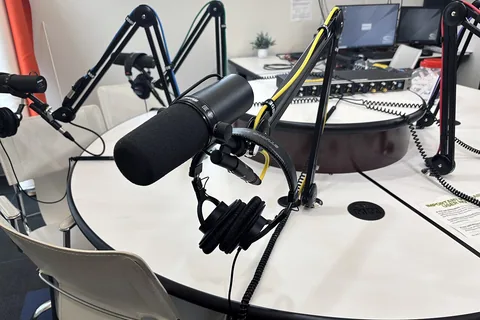
The studio is quiet, but the air feels tight. The host leans close to the mic. A late scratch drops five minutes before tape. The line shifts while the red light is on.
9 min read