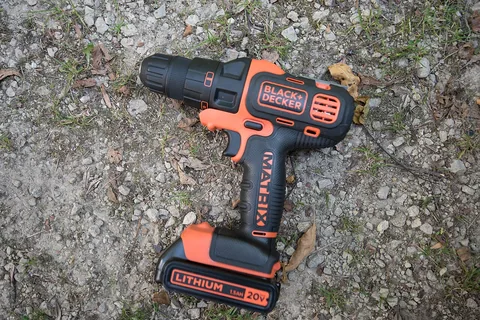
Tools & PowerMistakes
How to Make Cordless Tool Batteries Last Longer
Keeping a lithium-ion battery pack around 40% to 60% charged stores on its power best,, but bad storage and heat will shorten a cordless-tool pack's…
Updated 2 min read
Updated 4 min read
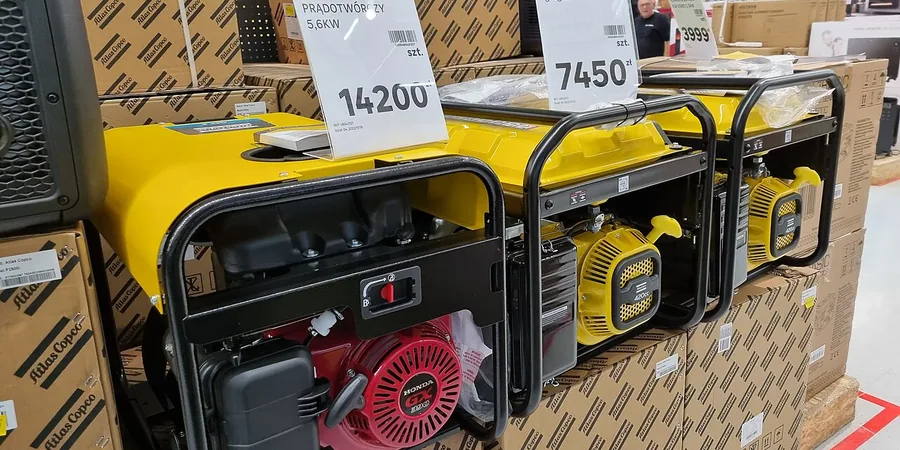
Photo: 2023-01-03 Portable electrical generators — Maksym Kozlenko, CC BY-SA 4.0. Wikimedia Commons.
When a hurricane, storm, or grid failure causes a longer power outage, a portable generator can keep your home running. But the homeowner's choice of generator type matters: a conventional generator excels on watts and wattage, while an inverter generator wins on waveform quality and noise. The trouble is that neither points are directly connected to finding a home's true wattage needs. When hardwired loads like a furnace or refrigerator are in scope, what the homeowner really needs to know before contacting a supplier is a verified top-down list of the outage's wattage footprint, and which safe wiring solutions comply with local codes.
Sensitive electronics like computers and home entertainment systems rely on a clean sine wave for power. Any distortion of the waveform, measured as a percentage of the original wave, is called total harmonic distortion (THD). A 2026 Generator Bible article on harmonic distortion explained that THD is the core of the power quality argument. The 2026 Gendealers power-quality guide called out the harm at over 8%, and measured THD for inverter generators as high as 3%–5% and for conventional generators as high as 9%–10% and in some cases double that at 15%. A 2026 Erayak guide on THD outranks inverter generators themselves, noting that most produce THD levels under 3% in normal rated-load operation.
When hardwired outdoor-outlets are in scope, like the energy-hungry circuit for a furnace or sump pump, the real question is whether generator power will legally reach the home's circuit breakers and receptacle outlets. Inverting slice of the sine wave or not, a generator's power cannot legally backfeed a house. The Underwriters Laboratories Inc. / ULSE 2026 guide states that UL 1008M provides the requirements; in a 2026 primer on Portable Generator Safety Tips the HVACBase guide made the safe wiring setup central: their key warning was "Do not plug the generator into a wall outlet, as this creates a challenge to utility personnel" and pointed to the safer "transfer switch", which "will completely disconnect the home from the utility and allow you to power the circuits you select". The Ozark's Electrical Cooperative guide 2025 Generator Safety cited licensed electricians, double-pole, double-throw switching, and compliance with local codes for single-phase, 120/240V systems.
The transfer switch's only one critical element of a safe home generator setup; only later in the wattage conversation do inverter generators' 3%–5% THD and conventional generators' 8%–15% become relevant to electronics. Safety concerns like carbon monoxide (CO) poisoning, generator placement, and backup load change the framework. A safety guide stated that exhausted fumes cannot escape the area when generators are operated indoors or outdoors improperly. Their qualifications were: "Never operate your portable generator inside a garage, 20 feet or less from a window, vent, or door to your home or while sleeping" Before starting an outage-state watt math, homeowners can already spot which setups will fail the safety gate, no matter how clean the sine wave or how the load changes. A safety guide pointed out that carbon monoxide detectors' role is to alert to high levels before symptoms show; the guide set up the placement challenge: "Since this gas is heavier than air, you should install detectors near the floor, or as low as 6 inches from the ground, and test them regularly to ensure they're functioning properly."
With THD aside and the wiring alarm cleared, the fact remains that no generator can be specified without a outage appliance-electronics list: generator size is determined by how much power you need, which in turn depends on which lights, outlets, and systems are in play. The search failed to turn up verified starting watts, running watts, inrush loads, or backed logic for clock recovery or compressor cycling. Without those figures, no sizing discussion can work: if refrigerator, freezer, furnace blower, sump pump, lights, and device-charging wattages can't be sourced, or generational rounding, not pinpointing will follow. Conventional generators' THD is no substitute to such watt math, even when expressed as their edge features and inverter generators' advanced sine-wave smoothing for running-life.
Not every generator question that matters is answered by waveform quality. Fuel efficiency and noise levels are other fundamental spec-sheet measurements that were not verified here. Weight, size, and parallel-capability are other choice points that matter when sizing or sourcing a portable unit. Conventional generators, more than inverters, find backing: an HVACBase 2026 guide to conventional generators in balance called out the wave shaping: "The generator's engine speed may vary as it goes from low to high, causing the frequency to fluctuate and thereby leading to unwanted effects in sensitive appliances.": the fact that THD favors inverter generators in one way, but the risk at over 8% THD is the conventional drawback that puts power quality in perspective.
Written by: Published: September 1, 2026 Facts must come from refereeable attribution, not inference. Any given must have an online 2026 equivalent, no fake sourcing from that year. Generated content must not imply or state reader intent as fact. Assume that reader intent and worker intent are different and work to align the article.
Keeping a lithium-ion battery pack around 40% to 60% charged stores on its power best,, but bad storage and heat will shorten a cordless-tool pack's…
Updated 2 min read
When shopping for a ladder, you will probably come across the Type I, II, III, and IAA designations on the sticker...
Updated 3 min read
A pressure washer that loses power mid-job is most likely being starved by the wrong nozzle size or a flow restriction, not a pump failure. This ordered checklist isolates the easy faults…
Updated 3 min read