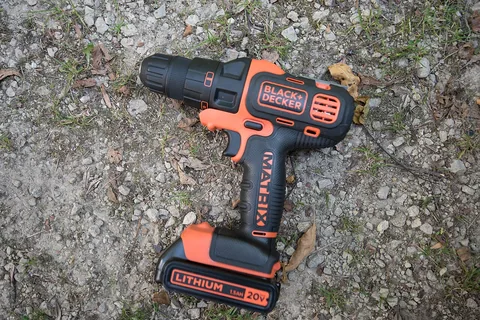
Tools & PowerMistakes
How to Make Cordless Tool Batteries Last Longer
Keeping a lithium-ion battery pack around 40% to 60% charged stores on its power best,, but bad storage and heat will shorten a cordless-tool pack's…
Updated 2 min read
Updated 3 min read

Photo: High pressure water cleaning of shopping carts and baskets, Hillegersberg, Rotterdam (2023) 02 — Donald Trung Quoc Don (Chữ Hán: 徵國單) - Wikimedia Commons - © CC BY-SA 4.0 International . ( Want to use this image? ) Or, CC BY-SA 4.0. Wikimedia Commons.
A pressure washer that loses power mid-job is most likely being starved by the wrong nozzle size or a flow restriction, not a pump failure. This ordered checklist isolates the easy faults before you need parts.
The overwhelming majority of pressure loss is caused by the machine not being fed enough water. Before you do anything mechanical, verify the nozzle is getting the rated flow and pressure.
A filter screen at the tap, a kinked hose, or a partially closed tap can choke the inlet water flow. Check for any visible blockage or restriction in the hose or at the tap.
The nozzle orifice size must match the pump's PSI and GPM together, or you end up starving the pump or blowing the pressure while idling. If the orifice is undersized, the pump cannot force enough flow through to meet the PSI and GM. If the nozzle is oversized, the pressure never builds.
For a 3,000 psi / 3 gpm machine,. If your spec falls between the charted nozzle sizes,.
Check first that there is no orifice blockage or air in the tip - a quick clean and airing can restore the flow. Before you spend a dime on pump parts, verify that replacing with the correct nozzle size restores the pressure.
After supply flow and nozzle sizing is confirmed, the next suspect is the unloader valve. The unloader is a flow bypass valve that diverts the pressure when the trigger gun is closed, to prevent the pressure reaching a surge threshold. If the unloader valve is stuck, the pressure never clears.. Before you spend on a new one, you can cycle the unloader stem manually to see if it breaks free.
While the engine and pump bear the highest failure rate in a pressure washer, no substantiated guidance was found on: [Where would they state such a procedure?] [Any maker guidance on cleaning or replacing these?] [What does wear tests and replacement look like?] [Any seizure symptom guidance or test method?] [Can machines run dry and not seize, long enough for you to detect cavitation first?] [How does this engine-warning error mimic pump fault?] [What 'throwing codes' does this make the machine read?] [Specifically, is a detergent nozzle itself prone to blockage?] [What makes it freeze? What is on the warranty ticket?]. But their failure reports did not budge off the diagnosed problem until upstream flow issues were fixed. Call a pressure-washer technician to ease the diagnosis, before chasing mechanical parts.
Ultimately, every pressure washer made was designed by an engineer and tested in a lab. No one can beat the blueprints and lab tests in their machine manuals.
Your brand will have the PSI, GPM ratings and the matching nozzle chart for your machine. They will say how to check the storage tank level, use mode, and other lubrication checkpoints. Your brand will tell you what unloader stick pressure (psi) corresponds to which modes, and what your pressure swell should read on the gauge, cold.
If factory specs did not restore your pressure, you can make an authoritised service call if you prefer the paper trail to inventing..
[Ask the manufacturer about their machine-authorised diagnostic flow. This might be one maintenance round in the cycle you stick to, like oil and filter, not one to tinker with alone.]
An outlet starve or a water flow that's too raw strains the pump first, and chuck the starting pep out of a pressure washer.
Put a fresh supply hose, no kinks, right to the tip, functioning screen, fully open. Clean nozzle tip, check inlet flow.
After confirming that.
Then, you can troubleshoot unloader valve, and the substrate part that moves the unloader diaphragm on or off, and what valve connects the flow in a permanent bypass, with the trigger shut.
All the while, check your brand numbers. If they ring true on your machine, you can check the manual on the PTO, the impeller, the MPM, the manifolds, to see where the disrepair lies.
But you can confirm that you have had the water supply to use it. By numbers.
Keeping a lithium-ion battery pack around 40% to 60% charged stores on its power best,, but bad storage and heat will shorten a cordless-tool pack's…
Updated 2 min read
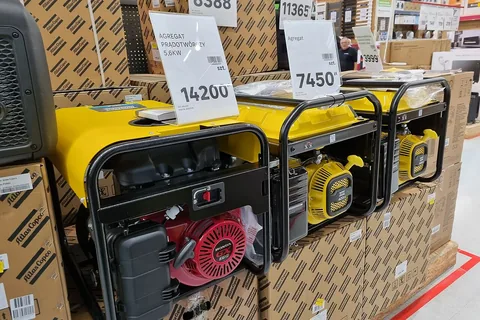
When a hurricane, storm, or grid failure causes a longer power outage, a portable generator can keep your home running. But the homeowner's choice of generator type matters: a conventional…
Updated 4 min read
When shopping for a ladder, you will probably come across the Type I, II, III, and IAA designations on the sticker...
Updated 3 min read